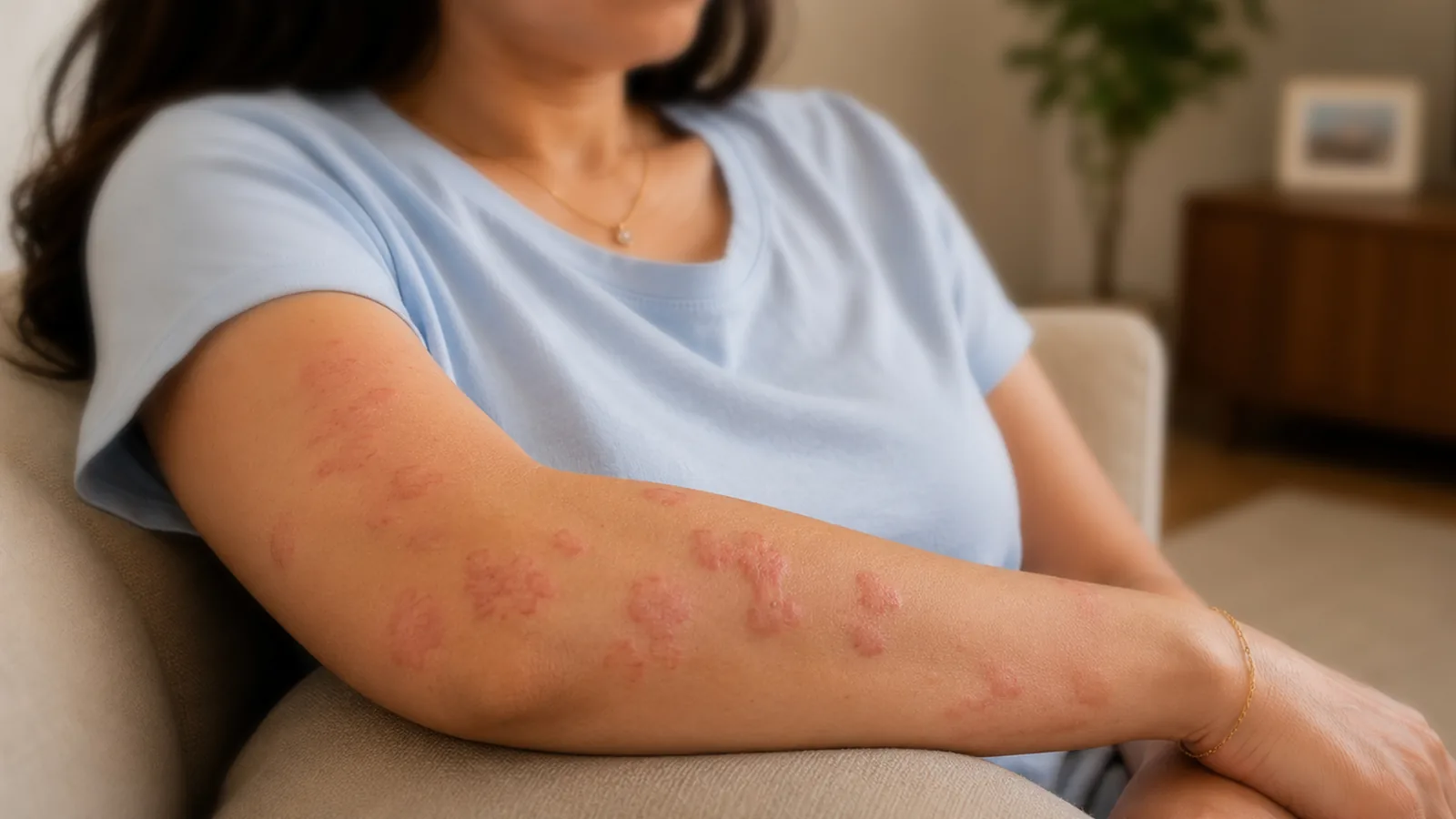
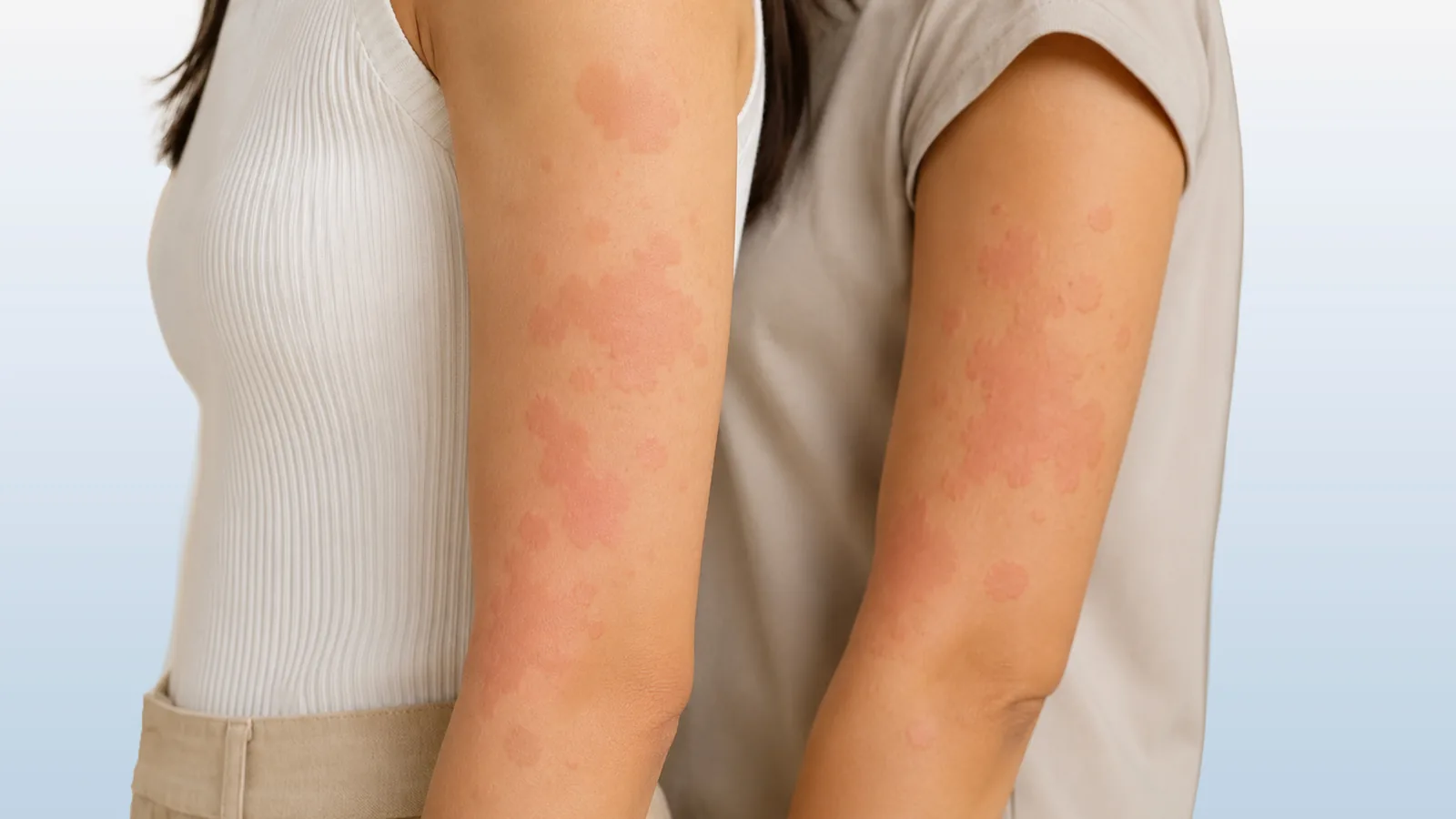
Two people can have hives that look identical on the skin and be dealing with two completely different conditions.
The first case has a clear explanation. Someone with a known hipon allergy eats it anyway because they love it enough to take the risk, and the pantal and pamamaga show up right on schedule. It’s not a surprise. An antihistamine handles it, the swelling goes down, and life goes back to normal by the next day. There’s a direct line between cause and effect, and everyone involved already knows what that line is.
The second case looks the same on the surface. Same welts, same itch, same swelling spreading across the arms or the back. But there’s no hipon, no clear cause, nothing to point to and avoid next time. Week two passes, and it’s still there. Week four, and it’s started fading and then returning to the same places. By week six, there’s no explanation anyone can offer, and no single choice that would have prevented it.
On the skin, these two cases are impossible to tell apart. Underneath, they’re not the same condition at all, and they don’t get treated the same way either.
What is the difference between acute and chronic hives
Urticaria, the clinical term for hives, is classified primarily by its duration. Acute urticaria refers to hives present for six weeks or less, usually a reaction to a food, medication, insect bite, or sometimes a viral infection, that clears once the trigger passes or the body works through it.[1]
Chronic urticaria refers to hives that persist or keep recurring for more than six weeks.[1]
Individually, an acute wheal and a chronic wheal look identical. What’s different is the pattern over time. Acute hives resolve and stay resolved.[1] Chronic hives fade, sometimes convincingly enough to feel over, then return.
Within chronic hives, chronic spontaneous urticaria (CSU) involves no consistent external trigger and is driven by the immune system activating on its own, while chronic inducible urticaria (CIndU) is triggered by a specific, repeatable physical stimulus. More on that distinction below.[1][2][3]
This is where a lot of the exhaustion around CSU comes from, more than the physical symptoms themselves: the repeated experience of thinking a flare has ended, only to have it come back. That cycle is one of the more taxing parts of living with the condition, and often part of why an actual diagnosis comes as a relief.[4]
When do hives become chronic
Six weeks isn’t an arbitrary number. It’s the point clinicians use to distinguish a passing reaction from something that needs its own workup.[1]
For many CSU patients, that mark passes unnoticed. The hives keep getting treated the way any hives would, antihistamine as needed, a mental list of things to avoid, waiting for the next flare to pass like the last one. Nobody stops to identify it as a distinct problem, which is part of why diagnosis of CSU tends to take much longer than it should (opens in a new tab).[3][5]
Two people can have hives that look identical and be dealing with two completely different conditions.
Break the I.T.C.H.Chronic spontaneous vs. chronic inducible: which one do you have
Not all chronic hives are CSU. Some follow a pattern tied to something specific enough to name, and that’s chronic inducible urticaria.
The difference comes down to whether a trigger is consistent and repeatable. With CIndU, it is. Cold urticaria occurs after exposure to cold air, cold water, or even after holding a cold drink. Heat urticaria and cholinergic urticaria are triggered by physical exertion, hot showers, or other factors that raise body temperature. Delayed pressure urticaria appears hours after something has pressed on the skin, such as a bag strap, a tight waistband, or sitting too long on a hard chair. Solar urticaria follows sun exposure. Symptomatic dermographism appears as raised lines wherever the skin has been scratched or firmly stroked.[1][2]
CSU doesn’t have this. Hives that show up regardless of temperature, pressure, sun, or activity, with no pattern tying them to anything specific, point toward CSU rather than CIndU. The two aren’t mutually exclusive either. It’s common enough to have both CSU running in the background with a CIndU trigger layered on top, which is part of why this is worth raising with a doctor rather than settling on a guess.[1]
What happens after you’re diagnosed
A CSU diagnosis isn’t usually a single test result. It’s typically reached through a detailed history, ruling out other causes, and sometimes bloodwork to check for related conditions like thyroid disorders, since CSU is more common alongside them.[1]
Getting the diagnosis is the start of a different kind of relationship with the condition, not an immediate fix. Most doctors will use it to establish a baseline: how often flares occur, how severe they are, how much they interfere with sleep or daily life, and treatment usually begins at a standard level before adjusting based on how the body responds.[1][2] That process can take a few consultations to settle into a rhythm, and it’s normal for the first approach tried not to be the one that ends up working long term (opens in a new tab).
What tends to help most in this stretch is treating it as an ongoing check-in rather than a single appointment to get through. Bringing updates on what’s changed since the last visit, not just when things get worse, gives a doctor a clearer picture to work from than starting over each time.
Does chronic spontaneous urticaria ever go away
For many people, yes, though not on a fixed timeline. CSU tends to run its own course. Some patients see it resolve within a couple of years, while for others it continues much longer, sometimes with stretches of full remission followed by a return of symptoms months or even years later.[1][2][3]
That unpredictability is part of what makes CSU hard to plan around. A flare-free stretch doesn’t necessarily mean it’s over for good, and symptoms returning after a long symptom-free period don’t mean anything went wrong; it’s consistent with how the condition tends to behave. Knowing this early matters mainly so that a remission isn’t mistaken for a cure and a relapse doesn’t feel like starting over from zero.
How to tell if your hives have crossed the six-week line
Most people don’t track hives when they first appear, because there’s no reason to. It’s only in hindsight, weeks in, that the question becomes real: has this actually been six weeks, or does it just feel that long?
That’s hard to answer from memory. Flares blur together; good days get forgotten faster than bad ones. A simple log closes that gap:
- The date each flare shows up, and roughly how long it lasts
- Where on the body it appears
- Whether anything preceded it (a meal, weather, stress, exercise), or whether it came out of nowhere
- A photo taken during the flare itself, since hives are often gone by the time you’re describing them to someone else
Two or three weeks of this is usually enough to see whether a pattern exists. If the same picture keeps repeating past the six-week mark, that’s documentation, and it’s exactly what turns “I think this has been going on a while” into something concrete enough to act on. Here’s the symptom log built around this same six-week clock that you can use, so there’s no need to build a symptom logging system from scratch.
Where this leaves you
Acute and chronic hives can look exactly the same on the skin, but they’re driven by different mechanisms (opens in a new tab) and managed differently.[1]
If hives have been showing up for six weeks or more without a consistent trigger and keep returning no matter what’s been tried, that’s no longer a long acute episode. It’s worth a more specific conversation with a doctor (opens in a new tab), and it may mean the usual remedies need to change (opens in a new tab) too.[1][6]
That’s worth paying attention to, and worth bringing to a doctor as a pattern rather than a one-off symptom.
Frequently asked questions
What is the difference between acute and chronic hives?
Acute hives last six weeks or less and usually have an identifiable cause. Chronic hives persist or recur for more than six weeks. In chronic hives, CSU has no identifiable external trigger, whereas CIndU is triggered by a specific physical stimulus such as cold or pressure.[1]
When do hives become chronic?
Once they’ve been present or recurring for more than six weeks.[1] That’s the point where a self-limiting reaction becomes a condition worth discussing directly with a doctor.
Can acute hives turn into chronic hives?
Yes, sometimes. Urticaria is classified by how long it lasts rather than by two separate underlying diseases: hives lasting six weeks or less are acute, and hives that persist or keep returning past six weeks are chronic. Acute urticaria often follows something identifiable, like a recent infection, and most of the time it settles on its own. In some cases it doesn’t, and the condition goes on to become CSU.[1] That’s part of why the six-week mark matters: if hives that started with a clear explanation are still appearing weeks later, the more useful question for your doctor is whether this has become something chronic.[3]
Does chronic urticaria ever go away on its own?
For many patients, yes, though the timeline varies widely and remission doesn’t rule out a later relapse.[2][3] It’s a condition that tends to be managed rather than resolved on a fixed schedule.
How do I know if my hives are CSU or something else, like an allergy or CIndU?
CSU has no consistent outside trigger. An allergy involves a specific allergen to which the immune system has become sensitized, and CIndU is triggered by a specific, repeatable physical stimulus like cold, heat, or pressure. Tracking when and where hives appear over a few weeks is usually the clearest way to tell.[1][2]
FA-11779373 – SEP2026-SEP2028
Not sure if it’s been six weeks?
The Symptom Checker walks you through the same six-week clock doctors use, so the pattern lives in your notes, not just your memory.
Try the Symptom Checker