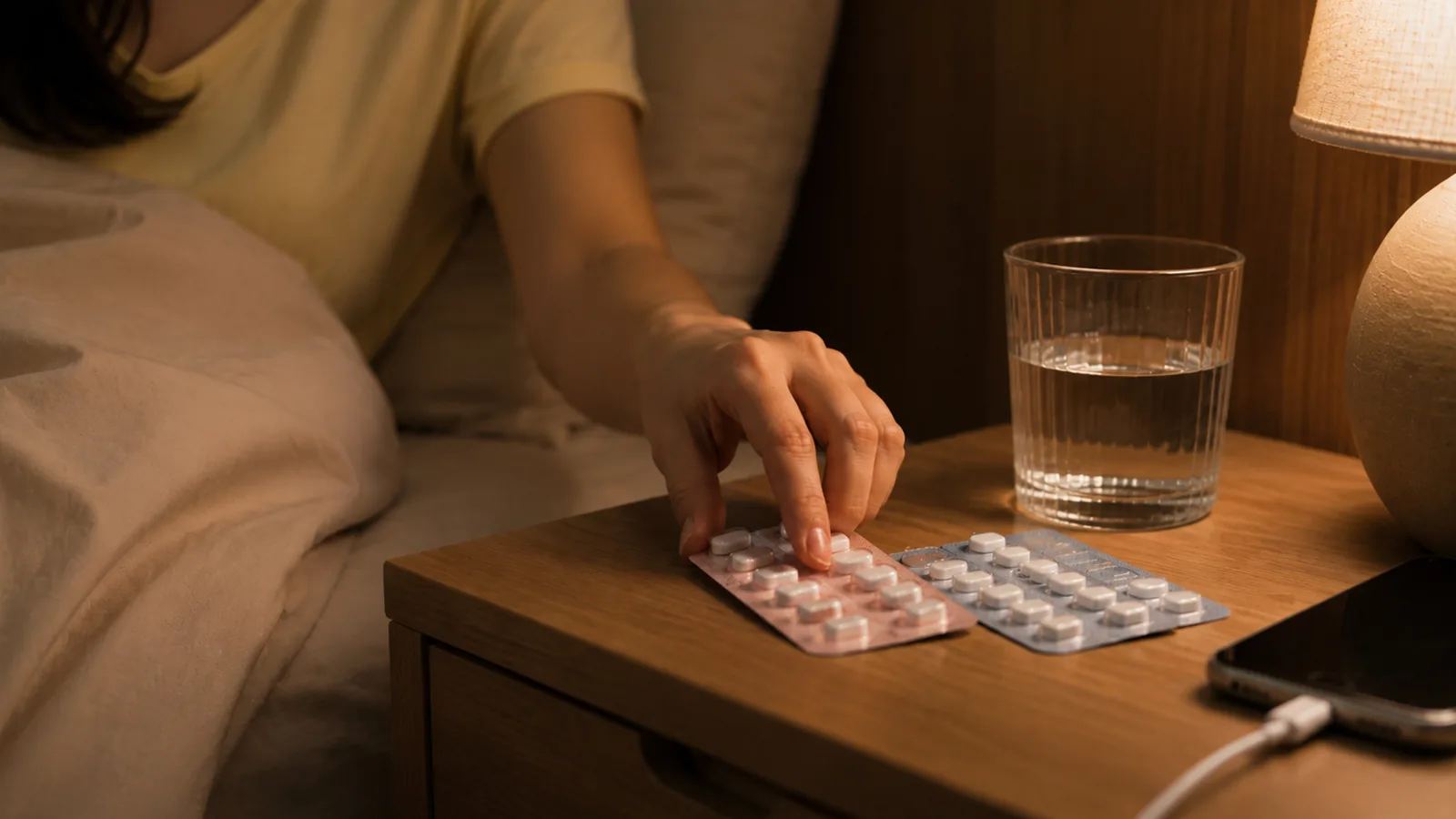
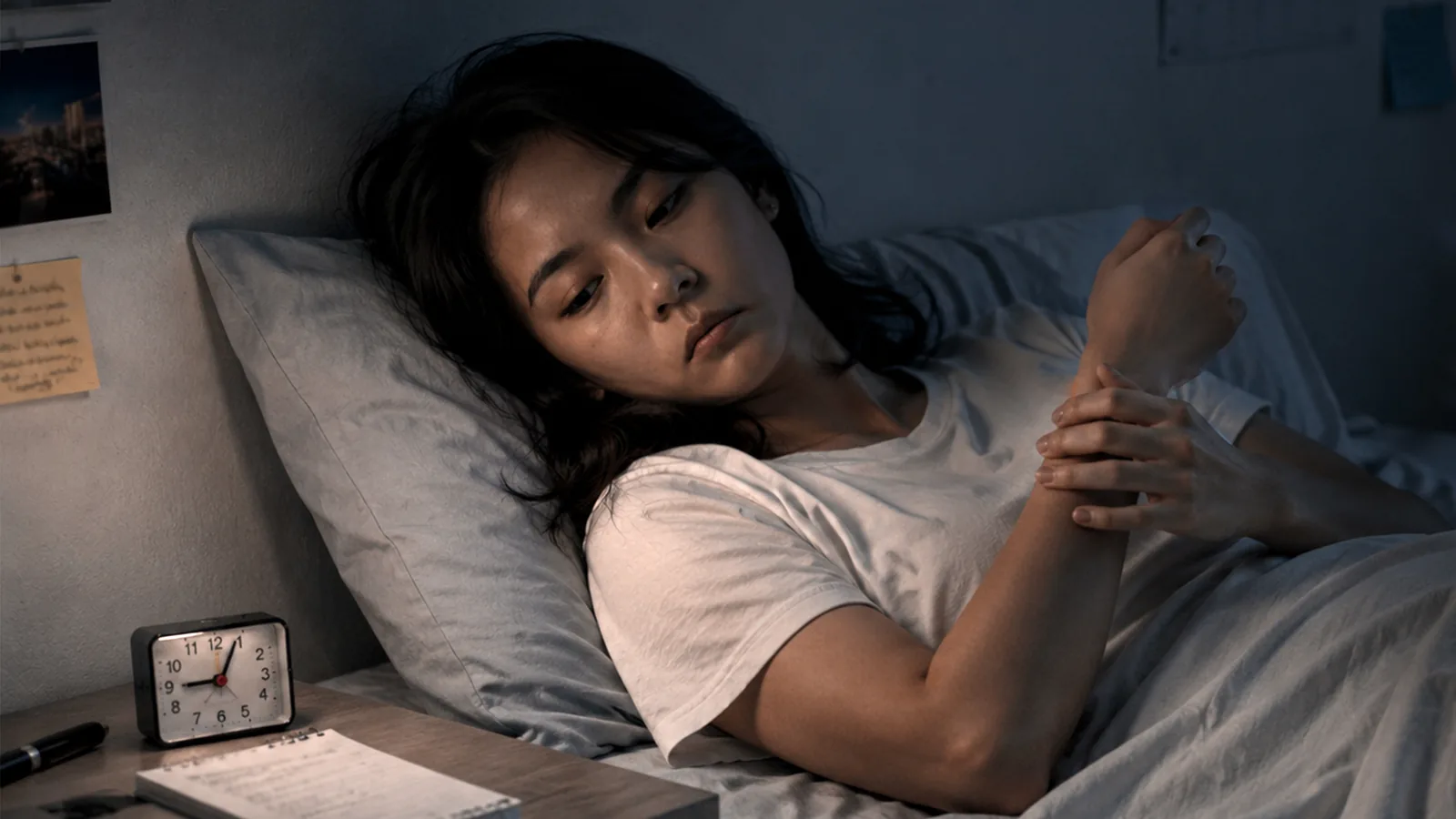
Your nanay asks the moment she sees your face. “Di ka na naman nakatulog nang maayos?” You didn’t say anything about it, but you didn’t have to. It’s in the heavy eyes, the slower morning, the way you snapped at your sibling over nothing five minutes ago.
That’s often what chronic spontaneous urticaria, or CSU, looks like from the outside. It’s something the people who know you best notice, the exhaustion, the short temper, the mornings that feel harder than they should, before you’ve fully put the pattern together yourself. CSU is hives that your immune system produces on its own (opens in a new tab), daily or almost daily, for six weeks or more, with no food, fabric, or soap you can point to as the cause. It’s not a one-time reaction you can wait out. It’s an ongoing condition, and for a lot of patients, nighttime is when it’s at its worst, even if nobody else sees it happening.
That misunderstanding, that sense of being second-guessed, often starts before you’ve even sat down with a doctor. It starts at home, when the people around you assume you’re just cranky, or stressed, or being dramatic about how bad it really is. If that sounds familiar, here’s what’s actually going on.
How common are nighttime CSU flare-ups?
Nighttime itchiness isn’t a rare complication of CSU. For a lot of patients, it’s the default. In one clinical study, nearly 3 in 10 people with CSU said their itch was at its worst between 10 pm and 6 am, and that group reported more severe itch and more sleep disruption because of it.[1] Separate research backs this up: CSU symptoms are most commonly reported in the evening and overnight, and disease severity itself follows a measurable 24-hour rhythm.[2]
This isn’t just a minor inconvenience, either. A cross-sectional study of CSU patients found that people who experienced nighttime symptoms were significantly more likely to have severe disease overall, not just worse nights.[3] In other words, nighttime flares aren’t a side detail. They’re one of the clearest signs of how much CSU is actually affecting someone.
If your nights are consistently harder than your days, that pattern is documented in the research, and it is worth describing to your doctor in exactly those terms.
Spotting a real nighttime pattern vs. a bad night
Not every rough night means something. Everyone has an off day here and there. In the research, patients are grouped by the time of day when their itch is at its worst. The nocturnal group is those whose peak falls between 10 pm and 6 am.[1]
This is also where a lot of patients get stuck, because the hives calm down by morning, it can feel like there’s nothing concrete to bring to a doctor’s appointment. But a consistent pattern is itself useful clinical information, even without a photo or a visible flare to point to. If people at home have started asking what’s going on with you more than once, that’s data too. Sometimes the people closest to you notice the wear and tear before you’ve named the pattern yourself.
The CSU-sleep cycle, explained
Before we get into the biology, here’s the short version: it comes down to how sleep and your body’s stress-response system interact. The next part gets a little technical, but stick with it. Understanding it is genuinely useful.
Poor sleep and CSU feed each other. When sleep is disrupted, whether it’s the itching keeping you up or something else entirely, it throws off your body’s normal cortisol rhythm. Cortisol is one of the hormones that keep inflammation in check, so when that rhythm is disrupted, inflammatory activity tends to rise while your body’s ability to control it drops.[4] Sleep loss has also been shown to reduce a type of immune cell that normally helps keep the immune system from overreacting, which may make CSU harder to manage.[4]
In plain terms: bad sleep doesn’t just make you tired. It can make your CSU worse, and CSU-related itching disrupts sleep in turn, so the two keep circling each other, one feeding the next.
The data on CSU patients backs this up directly. Poor sleep quality has been linked to worse disease control and sharply higher rates of anxiety and depression.[5] In one study comparing CSU patients with good and poor sleep, those with poor sleep had significantly higher disease activity across the board.[6] There’s even early evidence that sleep problems may raise the risk of developing CSU in the first place, not just worsen it once you have it.[7]
If nighttime is when your CSU is at its worst, this loop is likely a big part of why.
Managing nighttime CSU symptoms
Understanding the pattern doesn’t make the itching stop, but it does help you manage it more deliberately, and it gives you something concrete to work with instead of just waiting out each bad night.
Protect your sleep where you can. Since poor sleep and CSU seem to reinforce each other, anything that helps you sleep better, even indirectly, may help your CSU too. A cooler room, breathable bedding, and consistent bedtime and wake times are simple, low-risk steps to try. None of these will stop a flare on their own, but they remove one variable from an already difficult cycle.
Be cautious about “sleepy” antihistamines at night. A common workaround is taking a sedating, older-generation antihistamine at bedtime on top of a regular one, on the theory that it’ll help you sleep through the itch. A randomized controlled trial found that adding a sedating antihistamine at night did not control symptoms any better than a non-sedating antihistamine alone.[8] What it did do was leave patients noticeably groggier the next day. If you’re already taking something extra at night to get through it, that’s worth mentioning to your doctor, since it may not be adding the benefit you think it is.
Don’t dismiss what your family has already noticed. If the people you live with have picked up on how tired or on edge you’ve been, that’s not something to wave off. It’s a second data point you didn’t have to collect yourself. Bringing that into the conversation, based on both your own tracking and what others have observed, gives your doctor a fuller picture of how your nights are actually affecting you.
Track the pattern, not just the flare. If your symptoms are reliably worse at a specific time, write it down. Note when it starts, how long it lasts, and how it affects your sleep. That kind of detail is useful clinical information, and it’s exactly the sort of thing your doctor needs to hear to know whether your current treatment is actually working for you. (Read: How to Talk to Your Doctor About CSU (opens in a new tab))
Nighttime flares aren’t a side detail. They’re one of the clearest signs of how much CSU is actually affecting someone.
Break the I.T.C.H.When nighttime symptoms mean it’s time to see a doctor
For many CSU patients, nighttime itching is one of the clearest signs that a treatment isn’t doing its job. If you’re waking up multiple times a night because of your symptoms, and it’s been going on for more than a few weeks, that’s not something to just push through. It’s information your doctor needs, whether or not you have visible hives to show for it at the appointment.
It also helps to think of CSU less as something that’s simply “on” or “off,” and more in terms of flares, periods of relative calm, and the possibility that symptoms can return even after they’ve settled down. Uncontrolled CSU isn’t only about how many hives show up. It’s about how much they’re disrupting your life, and disrupted sleep is one of the biggest parts of that.[5][9] If your current treatment isn’t preventing nighttime symptoms, that’s worth raising directly, not saving for the last minute of your appointment. (Read: How to Talk to Your Doctor About CSU (opens in a new tab)) for more on how to have that conversation.
The bottom line
If your CSU is worse at night, there’s a real, documented reason for it. Nighttime symptoms are common in CSU; they’re linked to more severe disease overall, and disrupted sleep and CSU activity feed into each other in ways researchers are still working out.[2][3][4] Understanding that is the first step toward managing it: through better sleep habits, an honest conversation with your doctor, and treatment that actually accounts for what your nights look like, not just what your skin looks like during a daytime appointment.
Frequently asked questions
Why do hives get worse at night?
Nighttime symptom flares are a well-documented pattern in CSU.[2] Disrupted sleep and CSU activity appear to reinforce each other through the body’s stress-hormone system, though researchers are still working out the full picture.[4] If your CSU consistently worsens at night, that’s a real, recognized pattern, not something you’re imagining.
Is it normal for CSU to flare at night?
Yes. Nighttime and evening symptom flares are among the most commonly reported patterns in CSU,[2] and they’ve been linked to more severe disease overall.[3] It’s not a sign you triggered a flare. It’s worth documenting and discussing with your doctor.
Does poor sleep make CSU worse?
Yes, and it can work both ways. Poor sleep is linked to worse CSU disease control,[5] and CSU itching, in turn, disrupts sleep. Managing one can help the other.
When should I tell my doctor about nighttime CSU symptoms?
If nighttime hives or itching regularly disrupt your sleep, wake you up, or affect your day, tell your doctor exactly how often it happens and whether your current treatment is controlling it. If it isn’t, ask about other options.
FA-11779373 – SEP2026-SEP2028
Turn your bad nights into a clear pattern.
The Consultation Checklist helps you track when your symptoms peak, how often they wake you, and what to say so your doctor sees the full picture.
Open the Consultation Checklist